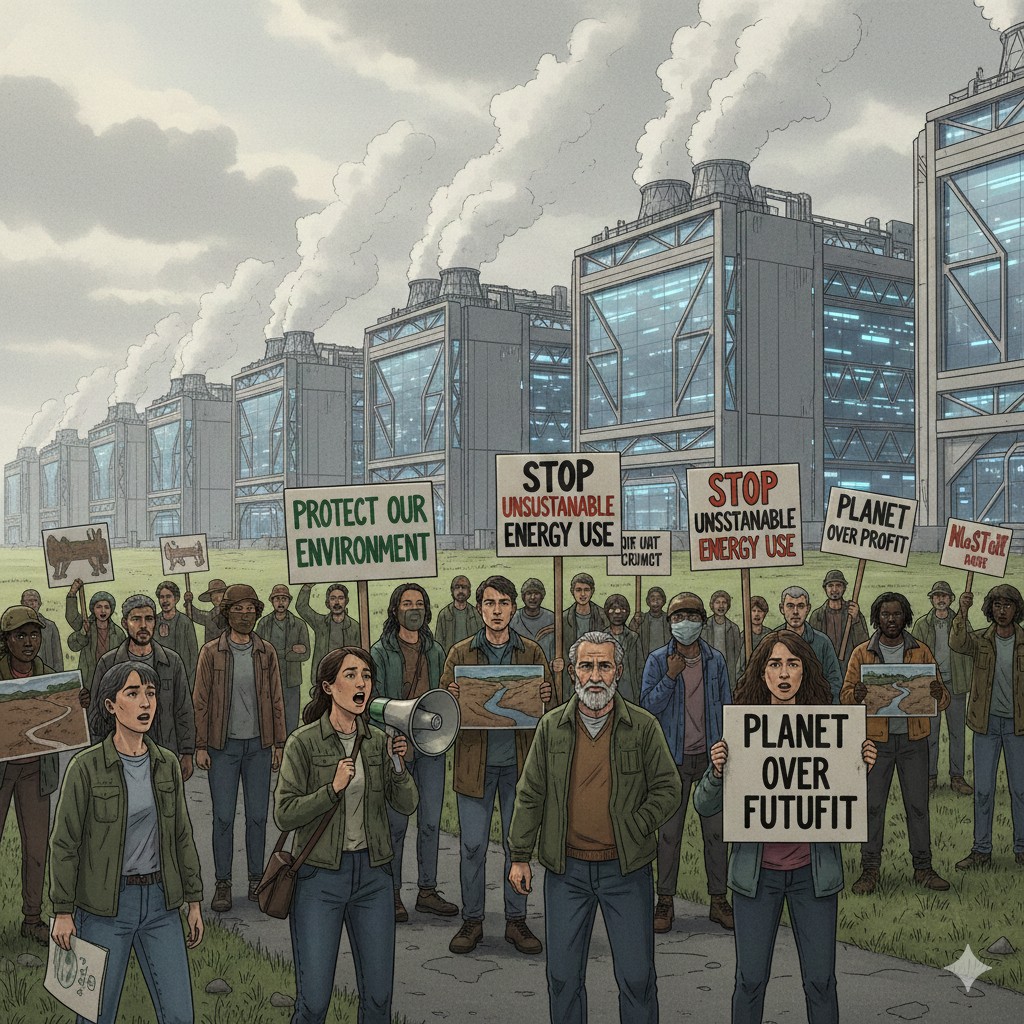
In 2025, a wave of public resistance has emerged against proposed AI data centers across the United States as communities, local lawmakers, and environmental advocates push back against the rapid expansion of large-scale, energy-intensive computing facilities. This trend reflects rising concerns over environmental impact, resource use, electricity costs, and community disruption linked to the growth of AI infrastructure.
What’s Driving the Opposition to AI Data Centers?
AI data centers are facilities that house large arrays of servers and networking equipment needed to train and run advanced artificial intelligence systems. These facilities require enormous amounts of electricity and water to power and cool the computing equipment, and their presence has sparked strong public concerns about environmental and economic impacts.
Electricity Demand and Rising Utility Costs
Local residents and lawmakers have pushed back against data center construction due in part to fears that these facilities will drive up electricity bills for nearby ratepayers. For example, in several states, public officials are worried that electric grid demand from AI data centers could strain resources and result in higher utility costs for households.
Water and Environmental Concerns
AI data centers also use significant amounts of water for cooling systems — a growing environmental concern as regions face water scarcity and competition for freshwater resources. Some critics argue that this water demand adds to the environmental footprint of AI infrastructure and competes with local needs.
Local Disruption and Quality of Life
In some areas, opponents say data centers degrade quality of life — citing increased noise, traffic, and the physical footprint of large facilities. Independent reports and community members have described how proposed data centers near residential areas have triggered concerns about property values and environmental disruption.
Notable Community Pushback Successes
Between March and June 2025, grassroots resistance halted or delayed nearly $98 billion worth of data center projects, according to reports. This reflects a significant rise in successful opposition compared with past years as awareness of AI infrastructure challenges grows.
Cities and states where resistance has been particularly vocal include Northern Virginia, Chicago, Atlanta, and Phoenix, where local residents have campaigned vigorously against new developments.
Legislative and Organizational Action
Proposed Laws and Moratorium Efforts
Some legislators have introduced measures to curb data center incentives or impose moratoriums on new construction. For example, national organizations and lawmakers are calling for a pause on new AI data center builds to allow time for environmental review and regulatory discussions.
Senator Bernie Sanders and others have publicly advocated for a moratorium on new data centers to allow technology policy to “catch up with the pace of infrastructure development” — highlighting concerns about electricity consumption and long-term economic consequences.
Grassroots Movements and Environmental Advocacy
Over 230 national organizations have joined forces to call for tighter controls on data center expansion, emphasizing environmental justice, equitable resource distribution, and accountability in tech infrastructure decisions.
Voices from Affected Communities
Public opposition is not only rooted in abstract environmental theories but also in lived experiences. Some residents near planned data centers have reported negative health and environmental outcomes — including poor air quality and alleged pollution related to backup generators and facility operations.
Civil rights groups have also become involved, urging greater scrutiny and formal guiding principles for data center projects to ensure corporations are held accountable for environmental and social effects.
What This Means for the Future of AI Infrastructure
Growing opposition to AI data centers may influence how and where future facilities are built:
New regulations and moratoriums could slow the current pace of approvals.
Environmental and utility cost scrutiny may lead to stronger oversight.
Community voices are becoming a key factor in shaping local and state policy.
Tech companies may need to invest in greener, more efficient infrastructure to reduce resistance and environmental impact.
These dynamics could reshape how AI infrastructure is deployed across the U.S. and internationally in the decade ahead.