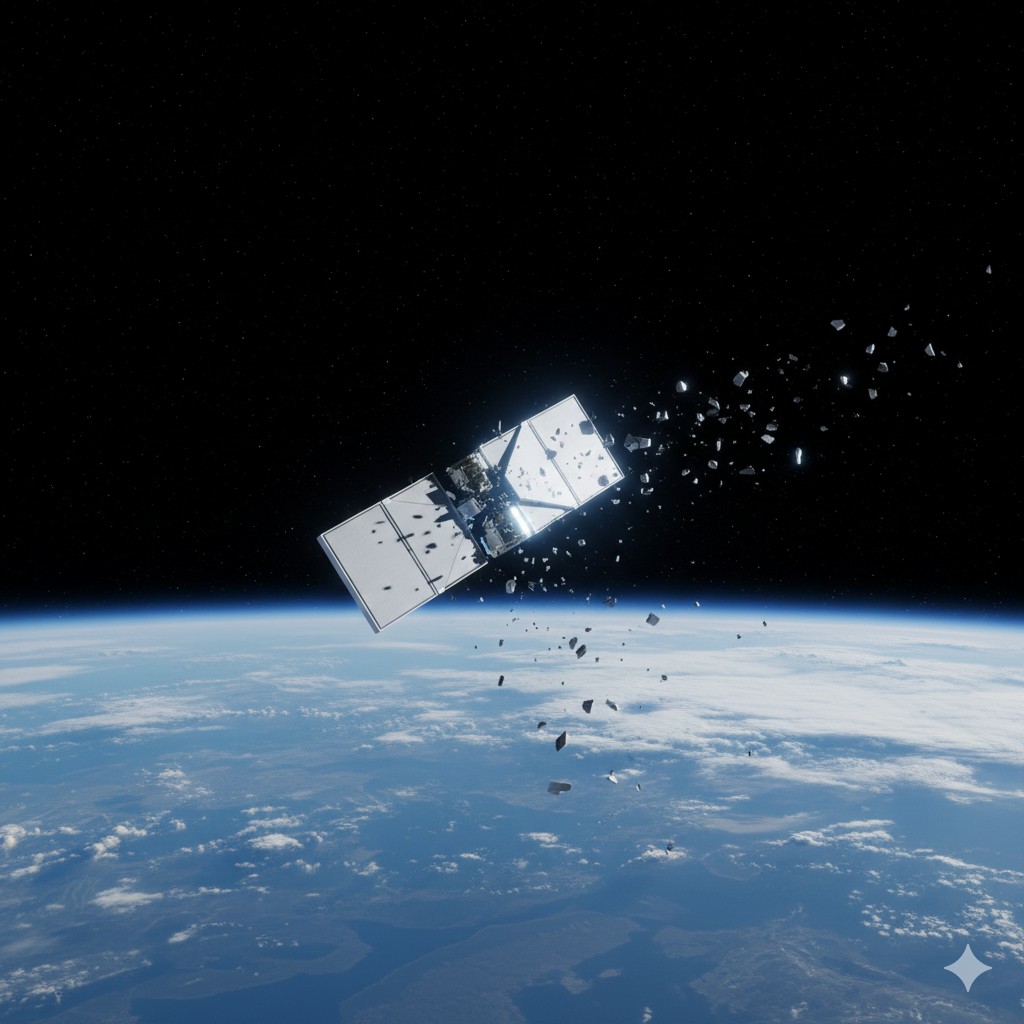
One of SpaceX’s Starlink internet satellites — designated satellite 35956 — experienced a rare and significant anomaly in low Earth orbit that appears to involve an explosion or rupture, leading to a rapid orbital drop and the release of several trackable debris fragments. SpaceX has confirmed communication was lost with the spacecraft as a result of the event.
The incident raises fresh concerns about space safety, orbital congestion, and debris management as the number of satellites in Earth’s orbit continues to grow rapidly.
What Happened to the Starlink Satellite?
According to official posts from Starlink on social media and subsequent tracking by space analysts:
The anomaly occurred around 418 kilometers (about 260 miles) above Earth in low Earth orbit (LEO), a busy region with thousands of active satellites.
Communications with the satellite were lost after the event, and tracking data showed it vented its propulsion tank and dropped in orbit by approximately 4 kilometers.
A small cloud of low-velocity debris fragments was detected around the spacecraft, indicating that some sort of energetic event occurred.
Despite the debris release and apparent anomaly, SpaceX says the satellite poses no threat to the International Space Station (ISS) or its crew.
The craft is now tumbling and expected to re-enter Earth’s atmosphere within a few weeks, where it will burn up harmlessly.
Explosion or Internal Failure?
Experts tracking the event suggest that the anomaly was most likely caused by an internal energetic source — possibly a fuel tank rupture or another propulsion-related malfunction — rather than a collision with another object. Radar data detected tens of objects moving at low relative velocity around the satellite, consistent with internal breakup rather than a high-speed impact.
This distinction matters because a collision with another satellite or debris could produce far more fragments and complicate orbital tracking and safety protocols.
Why This Matters for Orbital Safety
SpaceX’s Starlink constellation is the largest in the world, with thousands of satellites now orbiting Earth as part of efforts to provide global internet coverage. The scale of these constellations — along with those being deployed by other operators — contributes to an increasingly crowded LEO environment.
Unplanned breakup events like this can:
Create trackable debris that other spacecraft must avoid.
Add to the already high number of satellites and fragments in orbit.
Increase the risk of future collisions if debris is not properly monitored.
Complicate space traffic management and regulatory oversight — issues already highlighted by other close calls in orbit.
Although this particular event appears to have been relatively contained, it highlights the broader challenge of maintaining space safety as private and public entities launch more spacecraft than ever before.