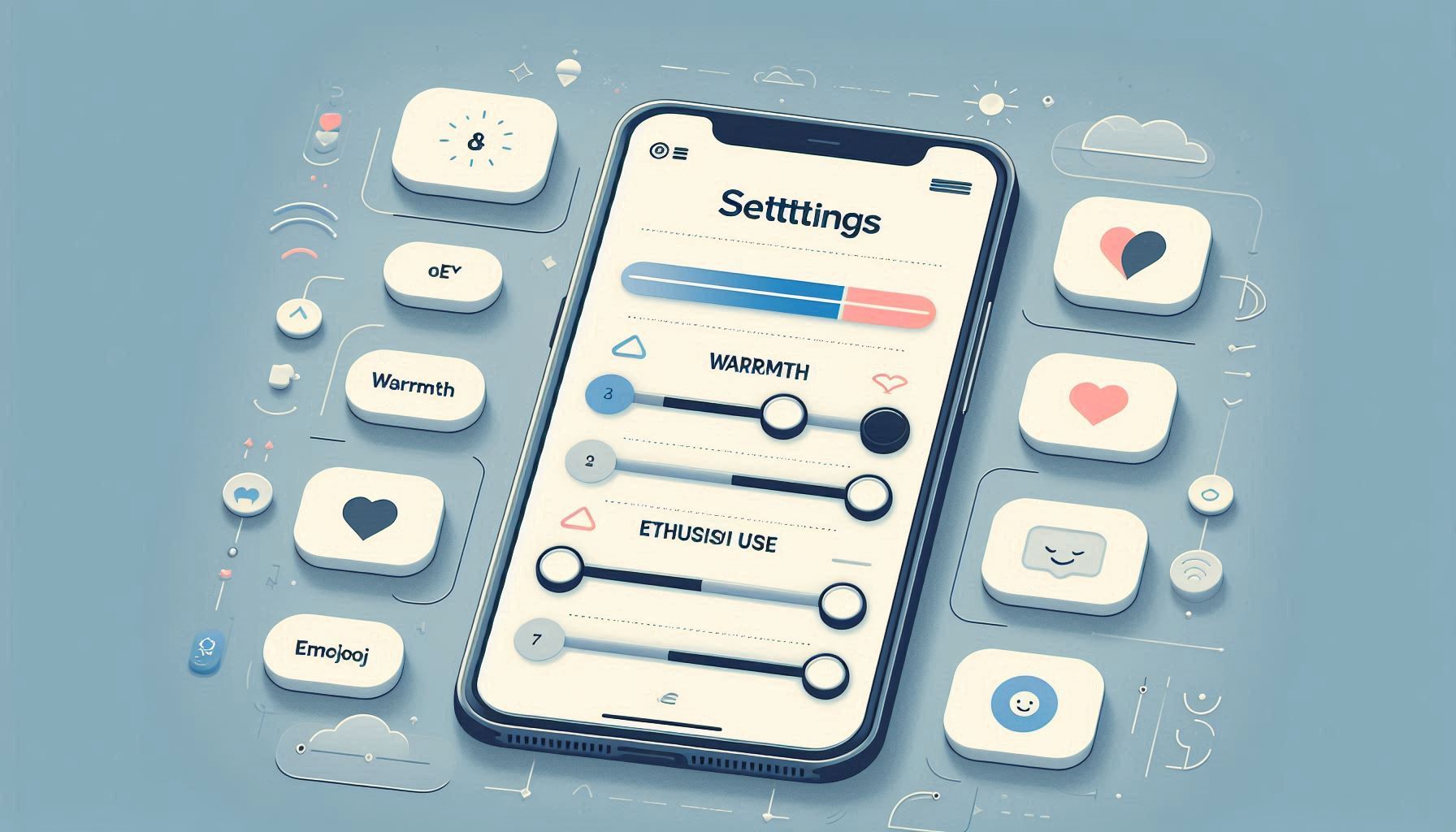
OpenAI has rolled out a new update for ChatGPT that gives users greater control over how the AI sounds in conversation. Through new personalization controls, users can directly tweak ChatGPT’s warmth, enthusiasm, and use of emojis, tailoring responses for different styles and contexts. These features are part of the expanded Personalization settings in the ChatGPT app.
What’s New in ChatGPT Personalization
With this update, ChatGPT users can now adjust specific personality traits that shape how the AI responds:
Warmth: Controls how friendly or emotionally engaging responses feel.
Enthusiasm: Adjusts the level of energy or excitement in replies.
Emoji Use: Lets users decide how frequently ChatGPT includes emojis.
Headers & Lists: Users can also affect formatting preferences like headings and list usage.
These settings are available under the Personalization menu and work on top of other tone controls that OpenAI already offers — like predefined styles such as Professional, Candid, and Quirky.
How It Changes Your ChatGPT Experience
Previously, users could set general styles or use custom instructions, but fine-tuning emotional characteristics was indirect. Now, with direct sliders or toggles for warmth and enthusiasm, people can shape how ChatGPT expresses ideas in a way that suits their goals — whether that’s a formal response for work or a more engaging, friendly tone for casual conversation.
For example, a writer could dial down enthusiasm for a polished business summary, while a social media manager might increase warmth and emoji use to energize audience-facing content.
Why This Matters
This update reflects OpenAI’s move toward more personalized AI interactions, responding to demand from users who want outputs that better match their communication style. It also addresses past feedback about the chatbot being too cold or overly friendly in certain contexts.
By giving users control over these characteristics, ChatGPT becomes more adaptable to different audiences, tasks, and personal preferences without changing the AI’s underlying capabilities or accuracy.