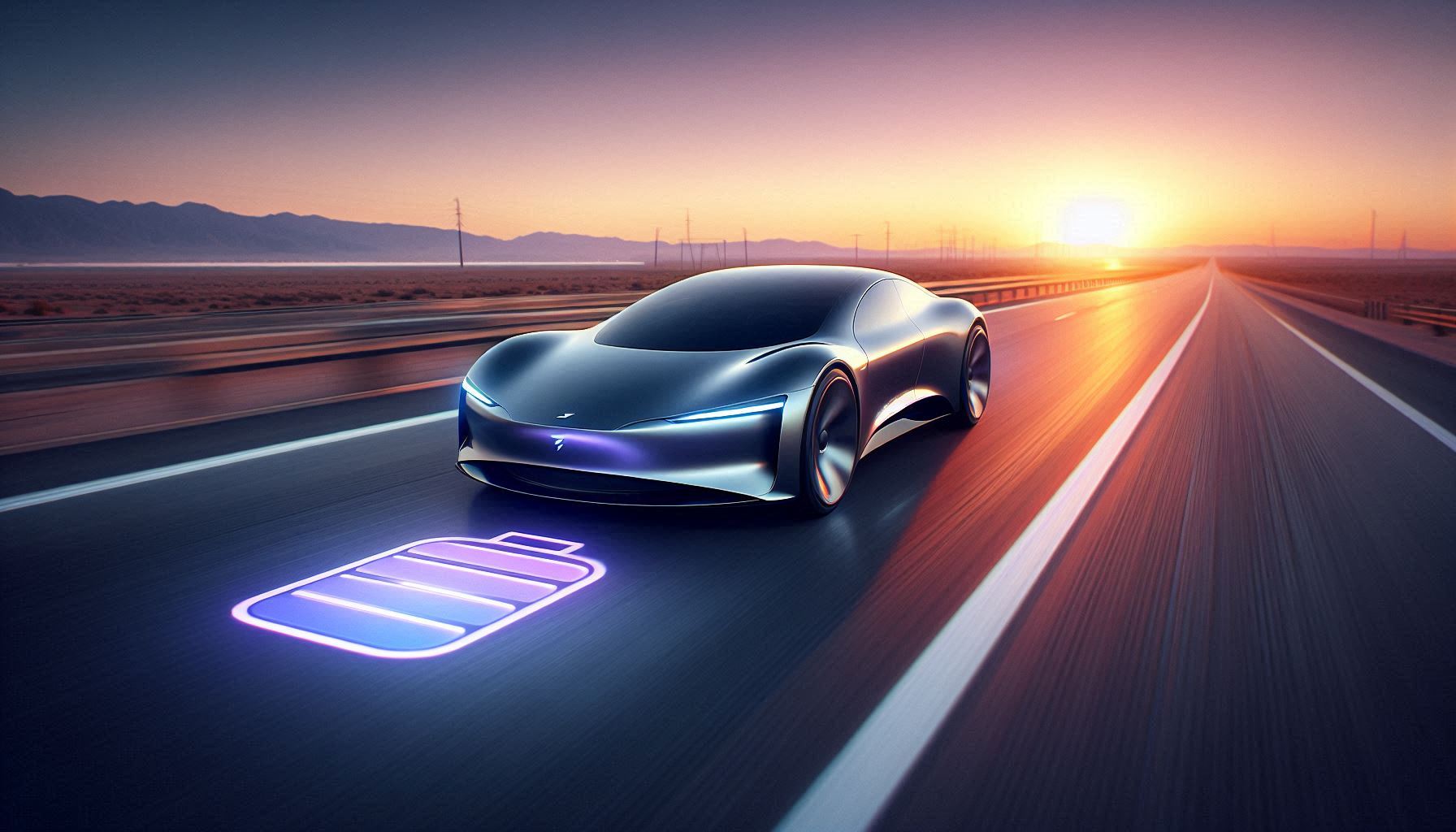
Electric vehicles continue to push the boundaries of range and efficiency. A recent concept EV has completed an impressive test drive of more than 1,000 km on a single battery charge, showing how far the technology is progressing and what the future of long-distance electric travel might look like. The achievement highlights how advanced aerodynamics, lightweight construction and efficient battery use are moving EV range into new territory.
What This Concept Vehicle Achieved
In a controlled test, the electric concept car covered 1,008 km (about 626 miles) on one full charge of its 87 kWh battery pack while maintaining a sustained highway speed. Designers focused on efficiency over brute battery size, achieving energy consumption as low as 7.8 kWh per 100 km — far better than typical production electric cars today.
This result was not achieved at crawling speeds. The vehicle maintained real-world traffic and highway conditions for much of the run, proving that long-distance EV travel doesn’t necessarily require oversized batteries when efficiency is optimized.
How It Was Possible
Achieving over 1,000 km on a single charge requires a combination of smart engineering choices:
-
Advanced aerodynamics: Reducing drag makes the car slice through the air with less resistance, preserving energy.
-
Lightweight materials: Extensive use of carbon fiber and other lightweight components reduces overall energy demand.
-
Efficient drivetrain: Optimization of electric motors and power delivery ensures minimal wasted energy during cruising.
Rather than simply increasing battery size, engineers focused on making every kilowatt hour count.
What This Means for EV Range Anxiety
Range anxiety — fear of running out of charge mid-trip — has been a barrier for some potential EV buyers. Tests like this show that ultra-long distances are becoming achievable even with moderately sized battery packs. While this remains a concept demonstration rather than an immediate production reality, it points toward what becomes possible when efficiency is prioritized.
Production EVs may borrow lessons from this approach in future models, bringing long-range capability to more mainstream vehicles. That can help make electric mobility more practical for highway travel and cross-country journeys without frequent charging stops.
Broader Context in EV Innovation
A few experimental and concept EVs have previously shown similar feats:
-
Mercedes-Benz Vision EQXX completed over 1,000 km on a single charge thanks to ultra-low energy consumption and a very efficient design.
-
Other manufacturer concepts and prototypes focused on next-generation solid-state or high-density batteries are also targeting similar ranges.
These milestones help shape what future EVs might be capable of, especially as battery technology evolves and aerodynamics become more refined.