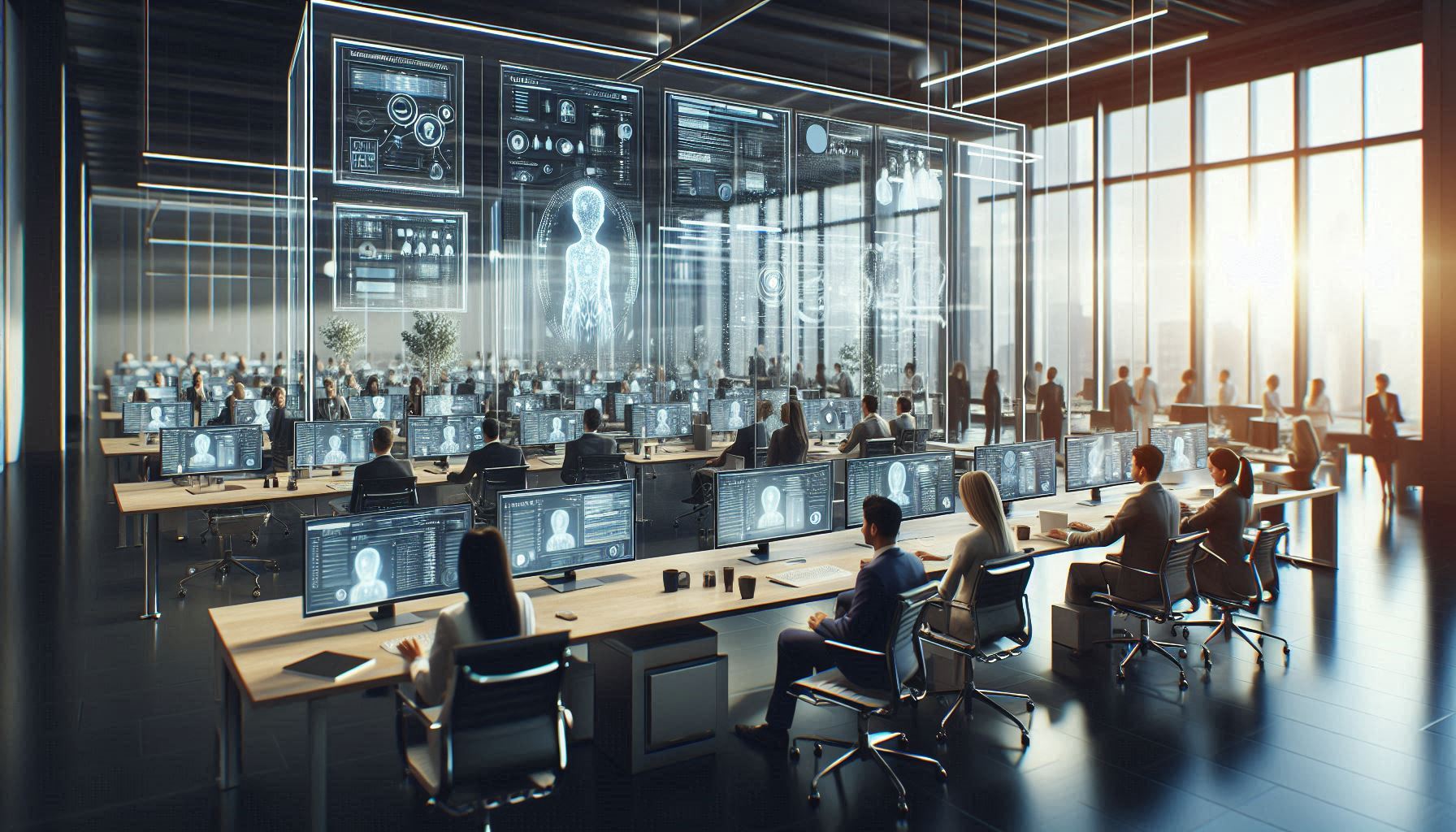
A prominent voice in artificial intelligence research is sounding a bold warning: AI isn’t just changing how we work — it may soon reshape where we work. According to Shane Legg, co-founder of Google DeepMind, the rise of advanced AI systems is likely to significantly reduce remote jobs and work-from-home arrangements. Instead of enabling flexibility, these technologies may push companies back toward in-office models where supervision, collaboration, and accountability are easier to manage.
This perspective offers a fresh angle on the future of work at a time when hybrid and remote roles are still hotly debated.
Why AI Could End Remote Work
Legg’s argument centers on how AI tools change both productivity tracking and work expectations.
AI systems increasingly:
-
Monitor output and performance in real time
-
Automate repetitive or data-driven tasks
-
Generate reports, insights, and even creative drafts
-
Provide instant guidance and feedback
For roles that once depended on asynchronous communication from home, AI may render distance less relevant — at least in management’s eyes. If AI makes it easier to measure exactly what someone is doing at any moment, companies might feel less comfortable with remote autonomy.
This shifts the remote conversation from “Can someone do the job from home?” to “Where is oversight best achieved?” — and Legg suggests that in many cases, companies will choose the office.
What Changed Since the Early Remote Era
Work-from-home became widely accepted during the early 2020s as cloud tools, video calls, and collaboration platforms matured. At that time, the focus was on flexibility and trust. Productivity was measured by results rather than presence.
Now, AI tools are flipping that dynamic:
-
They can infer context from activity patterns
-
They detect anomalies or performance drops automatically
-
They can assign, reprioritize, and even audit work
This level of visibility makes it easier for employers to demand closer coordination, often blending into supervision.
Legg’s view isn’t that workers will become obsolete, but that employer-employee dynamics will shift — and where work happens may be part of that shift.
What This Means for Employees
If AI does indeed reduce remote roles, the impact could include:
1. Greater Emphasis on In-Office Presence
Companies may prefer teams physically together to manage AI-augmented workflows.
2. New Skill Expectations
To stay ahead of automation, employees may need stronger collaboration, creative judgment, and contextual reasoning — traits less easily replicated by AI.
3. More AI-Enhanced Oversight
Performance tools driven by AI could become standard, evaluating output rather than hours logged.
What This Means for Employers
Rather than seeing AI as a remote work enabler, many organizations may treat it as a coordination multiplier. AI can make distributed work more measurable, but that measurability also invites tighter expectations:
-
Team synchrony becomes easier to enforce
-
Work patterns can be optimized centrally
-
Managers get instant feedback on project progress
Companies that embrace AI for operational consistency might choose closer physical collaboration as the new norm.
The Bigger Picture: Work, Trust, and AI
Legg’s warning isn’t a prediction of mass layoffs or stagnation.
Instead, it’s a reframing: AI is shifting the underlying assumptions about how and where work happens.
We’re moving from a phase where:
-
Output was trusted but hard to measure
to one where -
Output is visible and trackable in real time
That changes how organizations think about flexibility, supervision, and productivity.
Ultimately, the future of work will be shaped not just by technology, but by management philosophy and cultural adaptation.