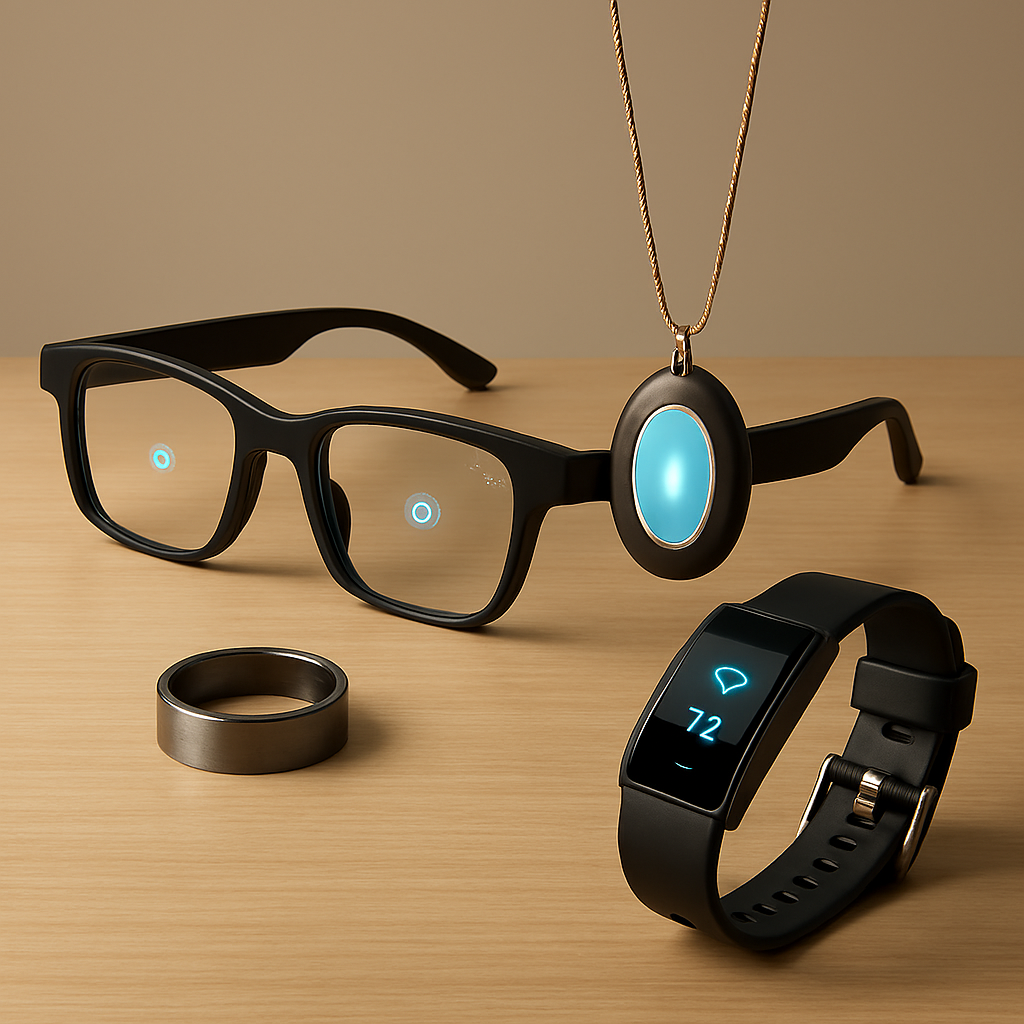
2025 marked a major shift in the wearable technology landscape — moving away from traditional health and fitness tracking toward AI-first devices that are becoming everyday companions. From AI-powered smart glasses to always-listening pendants, wearables are redefining how we interact with technology on the body.
The Wearables Evolution: From Fitness Trackers to AI Assistants
In 2025, wearable tech took a decisive pivot. Instead of being primarily fitness or health tools, companies rebranded and redesigned wearables as AI platforms that provide context-aware assistance — often without needing a phone.
This transformation was driven by advances in AI integration, miniaturized sensors, and new form factors — including smart glasses, AI pendants, smart rings, and wearable assistants designed to work all day, every day on the body.
Smart Glasses: The Most Visible AI Wearable Trend
AI Glasses Defined
Major tech companies such as Meta and Google began referring to their next-generation wearable eyewear as “AI glasses” — devices that go beyond simple notifications to offer real-time assistance, photography, and contextual AI responses.
These new glasses enable:
📸 Hands-free photos & videos
🗣️ Natural language interaction with AI
📊 On-demand information like navigation, translations, and reminders
📱 Fitness metrics and health data overlays (in some models)
Google and others are pushing similar devices for 2026 release — with speakers, cameras, and AI powered by platforms like Android XR.
Always-Listening Pendants & Rings: AI on the Body
Beyond glasses, a new class of wearables like AI pendants, smart rings, and pins emerged in 2025 — devices meant to stay on the body all day and complement glasses or standalone devices.
These wearables can:
🗣️ Record and transcribe conversations
🧠 Summarize events into action items
🔔 Provide proactive reminders and contextual insights
🧘♂️ Suggest wellbeing improvements in real time
They underscore a broader belief: the closer a device is to the body, the better it can understand context and help users in real-life situations.
Traditional Brands Embrace AI Too
Long-standing wearable makers — including Apple, Samsung, Fitbit, Garmin, and Oura — have integrated AI-powered assistants, translators, and coaching tools into existing devices. These improvements show that even classic smartwatches and fitness trackers are blending into the AI-wearable ecosystem.
What This Shift Means for 2026 and Beyond
The changes in 2025 paint a clear picture of where wearable tech is headed:
AI First: Devices are designed first for intelligent assistance, not just tracking.
Seamless Interaction: Wearables use natural language and context to offer real-time help.
Multiple Form Factors: Glasses, pendants, rings, and wearable assistants blend into daily life.
Smartphones Evolve: AI wearables increasingly act as companions or extensions to smartphones.
Analysts predict that as hardware improves and AI becomes more efficient, wearables could one day rival smartphones as the most important personal computing platform.